Last updated: September 10, 2026
Key Takeaways
- For example, a 6% annual rate becomes 0.5% per month as a nominal monthly rate.
- The consequence is that the first 12 to 24 months do not show the long-run payment.
- A 30-year loan is 360 months, a 15-year loan is 180 months, and a 20-year loan is 240 months.
- This usually applies when the down payment is below a lender’s threshold, often around 20% in conventional lending, though rules vary by country and program.
Mortgage payment scenarios are the different ways a monthly mortgage payment can change depending on loan amount, interest rate, term, taxes, insurance, and extra principal payments. This mortgage payment scenarios — complete guide is written for a buyer, homeowner, or refinance shopper who wants to understand what the payment really looks like before they sign anything, compare offers, or decide whether a loan is affordable. It explains the main mortgage payment scenarios, how to calculate them, and where the common traps are. This is information, not financial advice; your own situation may call for a qualified mortgage adviser, lender, or tax professional.
Table of Contents

- What a mortgage payment actually includes
- How do I calculate a mortgage payment scenario?
- Which mortgage payment scenario should I use for a home purchase?
- What changes the payment on a refinance or rate change?
- When should I stop using a simple payment scenario and get help?
- The mistakes people actually make with mortgage payment scenarios
- What changes the math in edge cases?
- How do I compare two mortgage scenarios without fooling myself?
What a mortgage payment actually includes
A mortgage payment is usually more than just principal and interest, and that is where many people get surprised. In most common setups, the monthly bill can include four pieces: principal, interest, property taxes, and homeowners insurance. If the lender uses an escrow account, it collects the tax and insurance money with each payment and pays those bills on your behalf when they come due.
Principal is the part that reduces the loan balance. Interest is the cost of borrowing, calculated on the outstanding balance. A fixed-rate mortgage keeps the interest rate the same for the term of the loan; an adjustable-rate mortgage, or ARM, starts with one rate and can change later under the loan’s adjustment rules. Escrow is simply a holding account for recurring property charges; it is not an extra fee in itself, though lenders may require a cushion.
The cleanest way to think about a mortgage payment scenario is this: what changes the monthly number, and what does not? Your loan amount, interest rate, term, taxes, insurance, private mortgage insurance (PMI), and HOA dues can all move the total. A 30-year term usually produces a lower monthly principal-and-interest payment than a 15-year term on the same balance, but the shorter term usually accelerates payoff. Because of that, the mortgage payment scenarios you compare should always show both the monthly payment and the payoff impact. Shorter term, faster finish. Simple.
I would be careful about any article or calculator that shows only principal and interest and calls it the “mortgage payment.” For a real household budget, that number can be incomplete by hundreds of dollars a month, depending on the property tax rate, insurance premium, and whether PMI applies. If you are comparing offers, ask for the fully loaded monthly payment, not just the note payment. That missing chunk can sting.
This matters most for first-time buyers, refinance shoppers, and anyone evaluating a price range. It is less useful if your payment is already escrowed and stable and you only want a rough sense of amortization. It is also less useful if you are buying in a county with unusual tax treatment, condo dues, or flood insurance requirements, because those can change the monthly picture fast; consult the lender, local assessor, insurer, or a tax professional for the exact treatment.
For reference, you can check common mortgage definitions through the Consumer Financial Protection Bureau and the Federal Trade Commission, and in the U.K. the MoneyHelper mortgage guidance pages are useful starting points. Lenders and regulators may define some details differently by country, and that is normal. No surprise there.
How do I calculate a mortgage payment scenario?

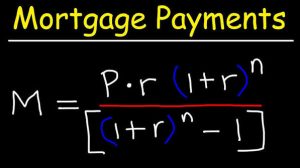
You calculate a mortgage payment scenario by combining the loan math with the property charges that apply to your loan. The core mortgage formula uses the loan amount, monthly interest rate, and number of monthly payments, then you add taxes, insurance, PMI if applicable, and any HOA dues.
Here is the step-by-step method I would use:
- Set the loan amount exactly. Subtract the down payment from the purchase price, or use the current balance for a refinance. Verify whether closing costs are being rolled into the loan, because that raises the balance. A problem sign is using the list price instead of the financed amount.
- Convert the annual interest rate to a monthly rate. Divide the annual nominal rate by 12. For example, a 6% annual rate becomes 0.5% per month as a nominal monthly rate. Verify whether the lender quotes APR or note rate; APR includes many finance charges, while the note rate drives the payment formula. A problem sign is mixing APR into the payment formula as if it were the note rate.
- Choose the term in months. A 30-year loan is 360 months, a 15-year loan is 180 months, and a 20-year loan is 240 months. Verify the term printed on the promissory note. A problem sign is using the wrong term and getting a payment that looks “too good” or too high.
- Compute principal and interest. Use the standard amortization formula or a reputable mortgage calculator. Verify the result against the lender’s quoted principal-and-interest payment to make sure taxes and insurance are not already embedded. A problem sign is a large mismatch that suggests you used the wrong rate, term, or loan amount.
- Add monthly property taxes. If annual taxes are known, divide by 12. If the tax bill is quoted on a quarterly or half-year basis, convert it to a monthly equivalent. Verify whether the lender uses the current bill or a reassessed estimate after purchase. A problem sign is assuming last year’s tax bill will stay the same after a sale, which often is not true.
- Add monthly homeowners insurance. Take the annual premium and divide by 12. Verify whether the policy covers only the structure or also contents and liability, because the premium varies. A problem sign is leaving insurance out entirely, which undercounts the payment.
- Add PMI or equivalent mortgage insurance if required. This usually applies when the down payment is below a lender’s threshold, often around 20% in conventional lending, though rules vary by country and program. Verify whether the lender requires it and when it can be removed; the CFPB explains that removal rules can depend on loan type, equity, and payment history, so consult the lender or a mortgage professional if you are unsure. A problem sign is forgetting it on a low-down-payment scenario.
- Add HOA or condo dues separately. These are usually not escrowed with the mortgage, but they still affect affordability. Verify the amount from the association’s current budget or estoppel letter. A problem sign is treating HOA dues as optional because they are not on the mortgage statement; if the loan or association documents are unclear, consult the lender, HOA, or a real estate professional.
A simple mortgage payment scenario can be useful even without exact tax or insurance data. Suppose a buyer is comparing two 30-year fixed-rate loans on the same home price: one with a smaller down payment and one with a larger down payment. The payment difference will come from both the loan size and any PMI. That is why two loans with the same sticker interest rate can have very different monthly costs.
A generic calculator often gets one thing wrong: it stops at the note payment. A better mortgage payment scenario includes escrow, PMI, and HOA dues separately, because those are what shape cash flow. If you are not sure of a number, use a conservative estimate rather than a wishful one. An underestimated payment can turn a workable budget into a stretched one very quickly; if the numbers are unclear, a lender, tax professional, or insurance agent can help confirm them. Cheap-looking numbers can be smoke and mirrors.
Which mortgage payment scenario should I use for a home purchase?
Use the mortgage payment scenario that matches the loan structure you are actually applying for, not the one that looks prettiest on a spreadsheet. If you are deciding whether a home is affordable, I would build three cases: a best case, a likely case, and a stress case. The point is not to predict the future perfectly; the point is to avoid a budget that breaks when one input moves.
A best-case scenario often assumes the lowest plausible property tax estimate, the quoted homeowners insurance premium, and no change in escrow. A likely case uses the lender’s current estimate, the actual insurance quote, and any required PMI. A stress case adds a higher property tax bill after reassessment, a slightly higher insurance premium, or an ARM adjustment if the loan is not fixed.
For a purchase, the biggest mistakes usually show up in the difference between the advertised payment and the real monthly outflow. If the property is in a county that reassesses on sale, taxes can jump after closing. If the home is in a flood zone, flood insurance may be required. If the property is a condo, monthly dues can rival a small utility bill. Those are not edge details; they change whether the payment fits. They change the math. Fast.
I would also separate “house payment” from “housing cost.” Your house payment may include mortgage, taxes, insurance, and PMI, but housing cost can also include repairs, utilities, and one-off maintenance. A roof, furnace, or water heater replacement is not part of the mortgage contract, yet it affects whether the monthly payment feels manageable. That matters most for buyers stretching to the edge of qualification. Honestly, that extra layer is where many budgets wobble.
The wrong mortgage payment scenario for a purchase is the one that assumes the quoted principal-and-interest payment is the whole story. It often is not. A better mortgage payment scenario is the one that answers a practical question: if one of the non-mortgage pieces rises by 10% to 25%, can I still pay comfortably? That is a more useful test than chasing the lowest possible monthly number.
If you want a source for how escrows and mortgage insurance work, the CFPB’s mortgage servicing and mortgage insurance explanations are useful. For tax and insurance treatment, local rules and lender practices can differ, so the exact monthly picture should be checked with the lender and, if relevant, a tax adviser.
What changes the payment on a refinance or rate change?
The payment changes on a refinance or rate change because the loan balance, interest rate, remaining term, and fees all interact. In a refinance, the new payment is not just “old payment minus lower rate.” It depends on the new principal amount, how many months remain, whether closing costs are financed, and whether the term is being reset.
A refinance scenario needs four checks. First, compare the new interest rate to the current note rate. Second, compare the remaining term to the new term. Third, see whether the new loan includes closing costs. Fourth, confirm whether the refinance resets escrow or insurance amounts. A lower rate with a longer term can still produce a payment that is not dramatically lower, because the amortization clock has been reset.
For an ARM, the key scenario is the adjustment path. ARMs have an initial fixed period, then they adjust on a schedule tied to an index and a margin, with caps that limit how much the rate can move at each adjustment and over the life of the loan. Those caps are the guardrails; they do not eliminate risk. If the loan documentation shows a 5/1 ARM, for example, the first number tells you how long the initial rate lasts, and the second tells you how often it can adjust after that. The exact structure varies by market and lender.
I would not use the refinance question only to hunt for a lower payment. Sometimes the better scenario is keeping the current payment and shortening the term if that suits the borrower’s budget and goals. Sometimes the opposite is true: a lower payment that restores breathing room is the right answer, even if the total interest over time rises. Both choices have a cost. A useful mortgage payment scenarios article should say that plainly.
The main drawback of refinance math is that it can fool people into focusing on the monthly reduction and ignoring the closing costs. If costs are paid upfront, the payment savings need time to offset them. If costs are rolled into the loan, the balance rises and the payment reduction may be smaller than expected. There is no universal break-even answer because rates, fees, and terms change by market and country. That’s the trap.
When should I stop using a simple payment scenario and get help?
You should stop relying on a simple scenario when the loan has features that can change the payment in ways a basic calculator will miss. These are the situations where the standard fixed-rate, fully amortizing model stops being a good fit:
The loan is an ARM with an upcoming adjustment: the payment can move at the next reset and may not stay near the initial amount — get the lender’s adjustment notice, index, margin, and cap terms before deciding.
Your property taxes are likely to be reassessed after purchase: the current tax bill may be based on an older assessed value — ask for a post-sale estimate from the county assessor or lender so the escrow figure is not too low.
The home is in a flood zone or other special-risk area: insurance can change the monthly payment materially — obtain the required insurance quote before you assume affordability.
You are using an interest-only, balloon, or other nonstandard loan structure: the payment may not reduce principal in the usual way, or a large balance may come due later — have the note reviewed by a qualified mortgage professional.
You are counting on PMI cancellation soon after closing: cancellation rules depend on loan type, equity, payment history, and investor rules — verify the removal conditions in writing, because they are not automatic everywhere.
Your income is variable or commission-based: a payment that looks fine on a strong month can be tight on a weak one — stress-test the scenario against a lower average income and a savings cushion.
The property has HOA dues, special assessments, or master insurance issues: the mortgage payment alone will not show the full housing cost — ask for the association documents and factor those charges separately.
You are adding cash-out debt or debt consolidation to the refinance: the new payment may hide a larger principal balance and a longer payoff horizon — compare the total debt and not just the monthly number.
In these cases, a qualified adviser, lender, or local mortgage professional can check the documents that actually govern payment changes. That is especially important because mortgage rules differ by country, state, lender, and loan program. No shortcut beats the paperwork.
The mistakes people actually make with mortgage payment scenarios
The biggest mistake is treating principal and interest as the whole monthly payment. The consequence is a budget that misses taxes, insurance, PMI, or HOA dues and feels tighter than expected. The correct alternative is to model the full housing payment and keep each component separate.
A second mistake is using a current tax bill as if it were permanent. After a sale, reassessment can change the bill, and escrow collections adjust with it. The consequence is payment shock in the first year. The correct alternative is to ask how the property is taxed after transfer and to use the post-sale estimate if one is available.
A third mistake is assuming the interest rate alone determines affordability. The loan term matters just as much. A 15-year mortgage usually has a higher monthly principal-and-interest payment than a 30-year mortgage on the same balance, even when the rate looks attractive. The consequence is a payment that is technically affordable on paper but too tight for the household. The correct alternative is to compare both term and rate together.
A fourth mistake is forgetting that PMI can be part of the monthly bill. On a low-down-payment purchase, that omission can make the scenario look cleaner than it is. The consequence is underestimating the true monthly outflow. The correct alternative is to ask whether mortgage insurance applies and, if so, how long it lasts and what triggers removal.
A fifth mistake is comparing only the monthly payment and ignoring fees or term reset on a refinance. The consequence is falling for a lower payment that may cost more over time or may not be low enough to justify the closing costs. The correct alternative is to compare the payment, the balance, the fees, and the remaining term together.
A sixth mistake is using an online calculator with default values for taxes and insurance from the wrong market. The consequence is a scenario that is numerically tidy and practically useless. The correct alternative is to replace every default with property-specific figures, even if some are estimates. Consult a lender, tax professional, or insurance agent if the figures are uncertain.
The honest limitation here is that no mortgage payment scenarios article replaces the actual loan estimate, closing disclosure, or promissory note. Those documents control the real numbers. A spreadsheet can help you think clearly, but it cannot override contract terms.
What changes the math in edge cases?
The math changes when the mortgage has features that break the standard monthly amortization pattern. One common edge case is a biweekly payment arrangement, where payments are made every two weeks instead of once a month. That can speed principal reduction, but only if the lender applies the extra timing correctly and the program is structured that way. Do not assume a biweekly schedule always shortens the term; some plans are administrative, so check the loan terms before counting on a shorter payoff. Strange as it sounds, the calendar can do the heavy lifting here.
Another edge case is an interest-only period. During that period, the monthly payment may cover only interest, so the balance does not decline. That can improve short-term cash flow, but the payment later changes when