Last updated: September 10, 2026
Key Takeaways
- A fresh 30-year term can trim today’s payment, but it also stretches out the mortgage debt.
- How long is my break-even period?
- Any calculator that leaves out all four is missing the point for this choice.
- That’s the real comparison most people need; a calculator ought to show it plainly.
A mortgage refinance calculator only helps when you compare the entire new loan with the one you already have, not merely the new monthly bill. In this article on how use mortgage refinance calculator compare new loan terms, the figure that matters is the full cost of switching: rate, term length, closing costs, and how long you plan to stay in the home. Side by side. That’s the test.
I write about personal finance, and I want to be plain here: this is information, not financial advice, and a qualified adviser should review your own situation before you refinance. Mortgage rules, tax treatment, fees, and rates vary by country and change often, so speak with a licensed professional in your market and check local guidance from your lender or regulator. For U.S. readers, the Consumer Financial Protection Bureau explains refinance costs and loan estimates at https://www.consumerfinance.gov/owning-a-home/close/refinance/. For tax treatment, check your country’s tax authority or an accountant.
What the calculator should answer for you
Should it lower your monthly payment? Shorten the payoff clock? Or just swap one expense for another? That’s the real job. A refinance calculator is not there to hand you a yes-or-no verdict in the abstract; it exists to line up two loan structures and let you compare them.
The first mistake people make is typing in only the new interest rate and stopping there. That leaves out closing costs, which can include lender fees, title charges, appraisal costs, and prepaid items. On a refinance quote, those costs are often the deal-breaker, not the rate itself. If the new loan saves $50 a month but costs several thousand dollars to close, the calculator has to show how long it takes to earn that back. The CFPB says to compare the annual percentage rate, fees, and loan estimate details, not just the headline rate. Sounds obvious. It isn’t.
The second mistake is comparing the new payment with the old one while ignoring the term. A 30-year refinance can come with a lower payment than a 15-year refinance, yet it may keep you in debt far longer and push total interest over time higher. A calculator that lets you compare both term length and total interest is the one worth using. The CFPB and Federal Trade Commission both emphasize comparing total loan cost, not payment alone.
I would use the calculator to answer four questions in this order:
1. What is my new monthly payment?
2. What are my total refinance costs?
3. How long is my break-even period?
4. What will I pay in total over the life of the loan?
Any tool that skips one of those is incomplete for this decision.
The question people actually mean: “Will this refinance save me money?”
Yes — but only when the savings beat the costs and fit your timeline. That’s the short, honest answer.
A decent refinance calculator should let you enter your current loan balance, current interest rate, remaining term, new rate, new term, and closing costs. From there, it ought to compare the old and new loans in dollar terms. Some calculators also show “cash out” refinances, but that adds another layer of judgment because borrowing more is not the same as refinancing to reduce cost.
Here is the clean way to read the result:
- If the monthly payment drops, that only helps if you keep the loan long enough to recover closing costs.
- If the term gets shorter, the payment may rise even if the rate falls, and that can still make sense if you want to be debt-free sooner.
- A reset to a new 30-year term can lower the bill today while increasing the time you carry mortgage debt.
I would treat the break-even period as a gate, not a trophy. If the calculator shows it takes many years to recover closing costs and you expect to move before then, the refinance may not fit. That’s especially true when the savings are modest. A lower rate is not automatically a better deal if the fee stack is heavy. Use a mortgage refinance calculator as a screening tool, not a final decision, and check the CFPB’s refinance guidance before you act.
The best calculators make room for prepayment penalties if your current loan has them, but many tools do not. Those charges are not universal, and rules differ by lender and country, yet they can change the math fast — like stepping on a rake in the dark. A calculator that ignores penalties or any lender-specific charges can make a refinance look better than it is. If your loan has a penalty clause, confirm it in the note or with a lender before you refinance.
30-year refinance vs. 15-year refinance: which term should you compare?
Borrowers who can handle the larger payment and want to reduce total interest over time usually come out ahead with the 15-year refinance. The 30-year refinance suits people who need breathing room in monthly cash flow or want more flexibility.
That’s the real comparison most people need, and a calculator should lay it out clearly. Compare the same loan balance at both terms, then check three things: monthly payment, total interest, and how much principal gets repaid early in the schedule. In the early years of any amortizing mortgage, a larger share of the payment goes to interest. That’s why term length matters so much.
A 15-year refinance usually has a higher monthly payment because the balance is repaid over fewer months. In return, the loan can be retired faster. A 30-year refinance usually comes with a lower monthly payment, but the lender has more time to collect interest. If you are deciding between the two, I would look at your monthly budget first and your long-term cost second.
This is where a calculator earns its keep: it shows the trade-off instead of making you guess. For example, if the 15-year payment strains your emergency fund, it may be too aggressive even if it looks cheaper on paper. A refinance that leaves you short on cash is a bad refinance.
One caution: do not compare only the monthly difference. A lower monthly payment can be misleading if the closing costs are large or if the new term restarts the amortization clock. The real question is not “Which payment is smaller?” It is “Which term fits my budget without making the loan more expensive than it needs to be?”
The honest side-by-side
A refinance calculator is the better tool when the choice depends on payment size, payoff speed, and closing costs. A broker quote is better when you already know the structure you want and need lender-specific pricing or underwriting details.
| Criteria | Mortgage refinance calculator | Lender quote / loan estimate | Winner for this condition |
|---|---|---|---|
| Monthly payment comparison | Shows the new payment against the current one | Shows the actual offered payment | Calculator for early comparison |
| Closing costs | Lets you model fees, but only if you enter them | Shows lender-specific fees and estimated third-party charges | Quote for precision |
| Break-even period | Usually calculated automatically | Not always obvious without extra math | Calculator for deciding whether savings justify costs |
| Term comparison: 15 vs. 30 years | Easy to model side by side | Usually limited to one offer at a time | Calculator for choosing between terms |
| Total interest over time | Often available if the tool is built well | May be buried in disclosures | Calculator for long-horizon comparison |
| Cash-out refinance modeling | Can compare borrowing more against the new payment | Shows the actual loan structure | Quote for final review |
| Rate-lock and timing details | Not included | Included in the lender process | Quote for execution |
| Prepayment penalties and lender quirks | Usually missing unless you add them manually | Should appear in disclosures | Quote for legal and fee detail |
| Ease of comparing multiple scenarios | Strong if you want to test several inputs fast | Poor for side-by-side comparison | Calculator for shopping |
My take is simple: start with the calculator, then verify the numbers with an actual loan estimate before you act. The calculator is for comparison; the quote is for commitment. Skip the calculator, and you may chase a payment that looks good but fails on costs. Skip the quote, and you may build your decision on numbers that never existed in a real offer. The CFPB and FTC both recommend comparing written estimates before you sign.
Which refinance calculator terms deserve your attention?
The new rate matters, sure, but it is not the only term that can change the result. The most useful calculator inputs are the ones that affect cash flow and total cost: current balance, remaining term, new rate, new term, estimated closing costs, and whether you are rolling fees into the balance.
If you roll closing costs into the new loan, the monthly payment may look manageable, but you are financing the fees and paying interest on them. That may be acceptable in some situations, though a calculator should make the choice visible. A good one will also show the difference between a refinance with cash needed at closing and one with fees added to the loan balance.
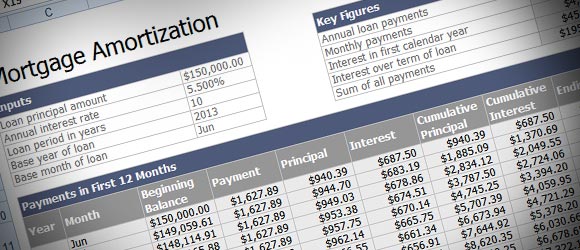
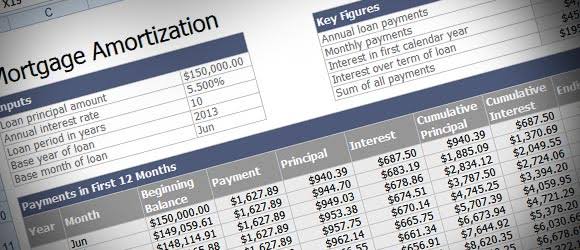
I’d be cautious with any calculator that ignores amortization details. Mortgage payments are not flat divisions of principal by months. They follow an amortization schedule, which means the interest share is front-loaded. Over a 30-year term, that shifts the total cost a lot.
Also watch for calculators that assume the same payment date or ignore escrow. Property taxes and homeowners insurance can sit outside the loan payment or be bundled into it depending on the lender and jurisdiction. So the “payment” shown by one calculator can look cleaner than the actual monthly outflow. If escrow is part of your real budget, make sure the calculator reflects that.
The terms that matter most are the ones that change your decision, not the ones that sound technical. A rate alone is not enough. A payment alone is not enough. You need the combination.
When a refinance calculator can mislead you
A refinance calculator can mislead you when you use it like a quote instead of a model. That’s the main danger.
It can also lead you astray if you enter rosy assumptions. Leave out closing costs, understate insurance changes, or assume you will stay in the house much longer than you really will, and the result flatters the refinance. A calculator is only as useful as the numbers you feed it.
Three situations deserve special caution:
- You may move soon. Even a good refinance can fail if you sell before you recover the closing costs.
- Your current loan has special features. An existing low-rate loan, a prepayment penalty, or a government-backed loan can change the math and the eligibility rules.
- The refinance extends your term too far. A payment drop can hide a much longer payoff period.
This is also where a loan officer’s pitch can outrun the calculator. A refinance can be sold as “saving money” when the real effect is a lower monthly bill plus a longer repayment horizon. That may be fine for some borrowers. It is not fine if the borrower thinks the refinance is cheaper in every sense.
I would not use a calculator to defend a refinance I already want. I would use it to pressure-test my assumption. If the numbers still work after I include costs, timing, and term length, then the refinance deserves a closer look. The FTC advises borrowers to compare offers, review fees, and ask questions before signing.
My verdict on choosing the right comparison
Choose the refinance calculator if you are still deciding between a 15-year and 30-year term, or if you need to see how closing costs affect the break-even point. Choose the lender’s loan estimate if you already have a likely offer and need the exact fee stack before you sign. Neither if you do not know how long you will keep the home or you cannot comfortably cover the new payment and closing costs.
That is the cleanest call I can make. The calculator is the right first tool because it compares new loan terms without locking you into one lender’s pitch. It is wrong to treat it as final approval or to ignore the real cost of refinancing, so consult a qualified professional before you commit.
If I were using one myself as a comparison tool, I would enter at least two scenarios:
– current loan versus a 30-year refinance
– current loan versus a 15-year refinance
Then I would compare monthly payment, closing costs, and total interest. If the calculator cannot show those clearly, I would move on.
What if the answer flips?
The overall verdict changes in a few cases. A refinance calculator can point you one way, then the details point the other.
- If your current loan has a very low rate and high remaining balance, refinancing into a new 30-year term can easily increase total interest even while lowering the payment.
- If you expect to sell the home within a short period, the calculator’s break-even point may matter more than the rate.
- If your income is variable, the lower payment from a longer term may be the safer cash-flow choice.
- If you are already near retirement and want the mortgage gone sooner, a shorter term may matter more than monthly savings.
These are not edge cases. They are the situations where people get into trouble by chasing the lowest payment on the screen.
What should I put into the calculator first?
Start with your current loan balance, your current rate, your remaining term, and the estimated closing costs for the new loan. Those four inputs shape most of the answer. How use mortgage refinance calculator compare new loan terms begins with those numbers, because a $2,500 fee on a $250,000 loan can shift the break-even date by months, not days.
How do I know if the refinance break-even is good enough?
I’d call it good only if the break-even point is comfortably shorter than the time you expect to keep the home. If you may move before then, the refinance deserves skepticism. In practice, that means a 24-month break-even looks very different from a 72-month break-even, even when the payment drops.
Is a lower monthly payment always better?
No. A lower payment can come from a longer term, higher total interest, or rolled-in fees. It helps cash flow, but it does not automatically make the loan cheaper. Use a mortgage refinance calculator to compare new loan terms, not just to chase the smallest payment.
Should I compare a 15-year and 30-year refinance every time?
Yes, if both are available to you. Those two terms show the main trade-off: lower monthly payment versus faster payoff and less interest over time.