Last updated: September 10, 2026
Key Takeaways
- A 30-year refinance means 360 monthly payments, unless the contract says otherwise.
- Check whether the first 6, 12, or 24 months are interest-only.
- Suppose your old loan has 180 months left and the refinance creates a new 360-month term.
- Even if the monthly payment falls, the loan has now been stretched across an extra 180 months.
Refinancing resets your amortization schedule when the new loan begins with a fresh payment plan. Usually, that means a new 15-, 20-, or 30-year term, plus a new split between interest and principal. Not all savings are equal. If you refinance, the real question is not just whether the rate is lower; it is whether the new loan creates a brand-new payoff timeline and whether that timeline helps or hurts your total interest cost. This is information, not financial advice, and you should check your own situation with a qualified adviser.
Who this applies to — and who should slow down
This applies to someone who already has a mortgage, auto loan, student loan, or other installment loan and is thinking about replacing it with a new one. I am assuming you already know the basics: a monthly payment has an interest part and a principal part, and amortization is the schedule that shows how each payment gets divided over time. Still fuzzy on the term? Define it this way: it is the timetable the lender uses to bring a balance to zero by a set date, usually with equal payments.
For a mortgage, refinancing often means a new closing, a new note, and a new amortization schedule. For a car loan or personal loan, it usually means the same thing in simpler form: the old contract ends, and a new one starts. In the U.S., a federal student loan refinance can move the debt to a private lender, which changes the rules entirely; consolidation is different and may not reset things in the same way. Country rules differ, and tax treatment can differ too, so I would not treat any refinancing decision as universal; check local rules and tax effects with a qualified adviser or accountant, and see the IRS overview of mortgage interest and refinance points at https://www.irs.gov/publications/p936.
Sometimes the math is only half the story. If you are behind on payments, in deferment, in forbearance, or trying to fix a legal or credit issue, the amortization schedule is only part of the picture. In those cases, I would slow down and get qualified help before signing anything. A neat table cannot fix a messy situation. The schedule can tell you how the loan pays down; it cannot tell you whether the refinance itself fits your budget, your taxes, or your long-term plan.
So, when does refinancing reset the amortization schedule?
Refinancing resets the amortization schedule when the old loan is paid off and a new loan is issued with its own term, interest rate, and payment formula. That is the standard case for most new mortgages, auto refinances, and personal loan refinances. The new lender does not keep the old schedule and just swap in a lower rate; it builds a new one from day one, usually based on the new principal balance and the new term length.
The key detail is this: the reset happens at the loan level, not just because the rate changed. A rate modification, payment deferral, or temporary hardship plan may change your monthly bill without creating a true refinance. A refinance, by contrast, is usually a replacement loan. Once the old balance is retired, your amortization clock starts over at month 1 on the new note.
That can produce very different outcomes. If you refinance a 23-year-old mortgage into a new 30-year loan, you may lower the monthly payment and still end up paying over a longer period. If you refinance into a shorter term, say from 30 years to 15 years, your payment may rise but the loan usually amortizes much faster. The schedule itself is not good or bad; what matters is whether you are stretching or compressing the remaining balance. That part bites.
I would separate two ideas that people often mix up: a lower interest rate and a reset amortization schedule. A lower rate can reduce interest even if the term stays the same. A reset schedule can do the opposite if you restart a long term. The first is about pricing; the second is about time.
What has to be true for the schedule to reset?
The schedule resets when the old debt is replaced by new debt, and there are a few things you can check before you sign. First, look for the new term length in the promissory note or loan estimate. Second, confirm whether the new loan is a refinance, not a modification. Third, check whether any unpaid interest, fees, or closing costs are being rolled into the new principal balance. If they are, that larger starting balance becomes part of the new amortization math. Simple, but easy to miss.
A useful way to think about it is to track the starting balance, the term, and the payment frequency. Monthly amortization is the common standard, but some loans use biweekly or other schedules. If the lender says your payment is “recast,” that can mean the loan is re-amortized around a new balance while the original maturity date stays the same. A refinance is different: it often replaces the maturity date too.
What I would check in writing:
1. The old loan will be paid in full at closing or on the refinance date.
2. The new loan has a new note date and maturity date.
3. The new payment schedule shows the first payment date and the number of remaining payments.
4. Any cash-out amount, financing fee, or escrow advance is included in the principal if the lender says so.
5. The lender’s disclosures show the annual percentage rate, or APR, which includes some costs and is not the same as the note rate.
If the paperwork does not show a new maturity date, or if the loan is being “modified” rather than refinanced, you may not be looking at a full reset. That distinction matters because a modification can preserve some of the original timing, while a refinance usually starts fresh.
How do you tell what the new amortization schedule will look like?
Compare the new principal balance, the interest rate, and the remaining term, then read the first few rows of the amortization table. I would do it in this order.
- Get the remaining payoff balance on the old loan. Ask for the exact payoff amount good through a specific date, usually a 10- to 30-day window. Verify that it includes accrued interest and any final fees. If the payoff figure is stale, the refinance math will be wrong.
- Write down the proposed new principal. Use the loan amount after any fees, closing costs, or cash-out are added in. Verify whether costs are paid upfront or financed. If the principal is higher than expected, the new schedule will push more early payments toward interest.
- Record the interest rate and whether it is fixed or variable. A fixed-rate loan keeps the same rate for the term; a variable-rate loan can change after a teaser period or on a schedule. Verify the index, margin, adjustment cap, and reset timing if it is variable. If you do not know how it adjusts, the schedule is incomplete.
- Check the term in months, not just years. A 30-year refinance means 360 monthly payments, unless the contract says otherwise. Verify the maturity date. If the new term is longer than your remaining old term, the amortization reset is likely extending your payoff horizon.
- Look at the first payment date and payment frequency. Monthly is common, but some loans are biweekly or have interest-only periods. Verify whether the first 6, 12, or 24 months are interest-only. If so, principal does not drop during that phase, and the schedule behaves differently.
- Ask for the amortization table or a loan estimate with a payment schedule. The first 3 to 12 payments should show how much goes to interest and how much to principal. Verify that the principal portion rises over time. If it does not, the loan may have unusual features, such as deferred interest or negative amortization.
- Compare total payments over the term, not just the monthly bill. Multiply the monthly payment by the number of payments and compare that with the old remaining balance plus any costs. Verify that the savings are real after fees. If the new payment is lower only because the term is much longer, the schedule has reset in a way that may cost more overall.
A concrete example helps. Suppose your old loan has 180 months left and the refinance creates a new 360-month term. Even if the monthly payment falls, the loan has now been stretched across an extra 180 months. The amortization schedule resets, and much of the early payment may go to interest again. That is not automatically wrong, but it is a choice with a cost.
What are the mistakes people make with refinancing amortization?
The biggest mistake is assuming a lower monthly payment means progress. It does not always mean progress. If you restart a long term, you may reduce cash flow while slowing principal payoff. The better comparison is the payment, the new maturity date, and the total interest path, not just the monthly bill.
Another mistake is refinancing without checking whether the new loan rolls fees into principal. When closing costs, prepaid interest, or financed insurance get added to the balance, the new schedule starts higher than you think. The result is more interest in the early months. The fix is simple: separate out upfront costs and ask whether they are paid in cash or financed.
A third mistake is confusing refinance with modification. A loan modification can adjust payment terms without fully replacing the debt. If you assume the schedule reset when it did not, you may misread how quickly you are paying down principal. The better move is to ask the lender, in plain language, whether the old note is being paid off and a new note issued.
A fourth mistake is ignoring the remaining term on the old loan. If you had 8 years left and refinance into 30 years, you are not “starting over” in a neutral way; you are lengthening the payoff horizon by 22 years. Sometimes that makes sense, but it is a trade-off, not a free benefit. Exactly.
A fifth mistake is overlooking prepayment penalties or exit fees. Some loans, where allowed, include charges for paying off early. Those charges can change the economics of refinancing and may make the new schedule less attractive. The right alternative is to request the payoff statement and ask whether any penalty applies before you compare offers.
When should I stop and get qualified help?
You should stop and get qualified help when the refinance changes more than the interest rate. Here are the situations that matter most:
You are considering cash-out refinancing: this increases the new principal and often resets amortization on a larger balance — speak with a qualified mortgage or tax adviser before you sign.
The loan has a variable rate, teaser period, or interest-only phase: the payment schedule can change after the reset point — ask a loan officer or adviser to explain the adjustment caps and worst-case payment path.
Your current loan has a prepayment penalty or deferred interest: the refinance may trigger extra cost or capitalize unpaid interest — get the payoff statement and professional review before moving ahead.
You are dealing with student loans, tax liens, or legal judgments: the refinance can affect borrower protections, discharge options, or collection rights — consult the relevant loan servicer rules and, if needed, a qualified adviser or attorney.
You are trying to solve a cash-flow crisis: a lower payment may come from extending the term, not reducing the debt faster — if you cannot absorb a payment shock, get help before trading one problem for another.
You do not know whether the new loan is a refinance or a modification: the amortization reset may not work the way you think — ask for the exact legal documents, not just a summary from a sales call.
If any of those apply, the issue is not that refinancing is impossible. The issue is that the schedule alone does not tell you enough. A schedule is a map; it is not a decision.
What happens in edge cases?
Edge cases are where standard refinancing advice breaks, and they matter because the paperwork can look similar while the timing is very different. If you are refinancing an adjustable-rate mortgage into another adjustable loan, the new amortization schedule may look normal at closing but behave differently after the first rate reset. In that case, I would read the adjustment rules as carefully as the payment table.
If you are refinancing after making extra principal payments on the old loan, your old schedule may have been ahead of pace. A new refinance can erase that progress by starting a fresh schedule from the new balance. That does not mean extra payments were wasted; it means the new contract does not carry forward your earlier acceleration in the same way.
If the refinance includes a short first term, like a 5-year balloon or a 2-year teaser, the schedule may reset again later. That is a very different structure from a plain fixed-rate loan. The number to watch is the balloon date or adjustment date, because that is when a second reset, refinance, or payoff may be forced. Sneaky little deadline.
Biweekly payment plans are another edge case. A biweekly plan can make it feel as if you are making 26 half-payments a year, which is not the same as a standard monthly schedule. If the lender is simply splitting one monthly payment into two smaller debits, the amortization may not change much. If the plan truly adds extra principal each year, it can shorten the schedule, but you need the contract to show that plainly.
What should the reader look for on the paperwork?
The paperwork should show the new balance, the term, the rate, the payment frequency, and the payoff date in the same set of documents. I would look for the loan estimate, promissory note, and closing disclosure or equivalent local forms. If any one of those is missing, the picture is incomplete.
A useful habit is to line up three dates: the old loan payoff date, the new loan funding date, and the first payment date. Gaps and overlaps matter because interest accrues daily on many loans. If the lender says there will be no payment for 45 days, that does not mean no interest is building. It means the schedule is still running, just not due yet.
Also check whether escrow, insurance, or taxes are part of the monthly payment. In mortgage refinances, those items can make the payment look larger even when the loan principal portion is smaller. The amortization schedule tracks principal and interest; escrow is a separate bucket. Mixing them up leads people to think the schedule is wrong when it is not.
Where can I compare refinance rules and pricing?
Because refinance rules and pricing vary by lender, loan type, and location, compare the loan estimate, the promissory note, and the closing disclosure with official guidance from the CFPB and your lender. For mortgage consumers in the U.S., the CFPB explains refinance costs, loan estimates, and closing disclosures at https://www.consumerfinance.gov/owning-a-home/refinancing/. For tax treatment, the IRS notes that refinance points and mortgage interest can have specific rules, so verify them before you rely on a lower payment alone. If you are comparing student loan options, review the federal program terms with your servicer and, if needed, a qualified adviser or attorney.
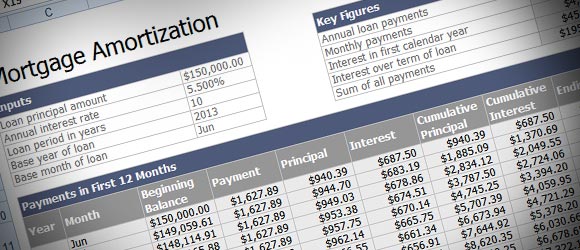
When the quote looks attractive, ask the lender to show the refinance amortization schedule side by side with the old one. That makes it easier to see whether the new loan is actually shorter, longer, or just cheaper month to month. It also helps you compare the total payments over 5, 10, or 30 years instead of judging by the headline rate.
Does refinancing always reset your amortization schedule in the same way?
Refinancing does not always reset your amortization schedule in the same way. A full refinance usually starts a new schedule, but a modification, recast, or hardship arrangement may not. The difference is in the contract: if the old loan is paid off and replaced, the schedule usually resets; if the lender is only adjusting payments on the existing note, the original maturity may remain.
That is why the label matters less than the documents. Ask whether the balance is being retired, whether a new note is being issued, and whether the maturity date is changing. Those three answers tell you far more than marketing language does.
If you want to compare refinance offers, compare the new amortization schedule, the APR, the term, and any fees side by side with the old loan. Then decide whether the reset helps you lower total cost, lower monthly pressure, or both.