Last updated: September 10, 2026
Key Takeaways
- If you look only at the balance after 12 months, you may feel as if nothing happened.
- Over 12 months, you can see how much went to interest and how much reduced the balance.
- Over 60 months, the change becomes easier to feel.
- Review the cumulative totals after 12 months.
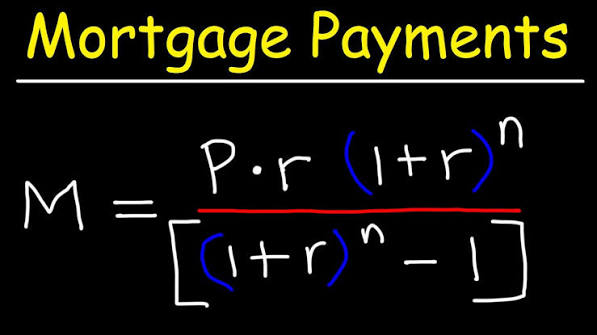
A mortgage amortization schedule lays out every payment as a split between principal and interest. That’s the cleanest way to see why the early payments mostly feed interest while the later ones start biting harder into the loan balance. This is general financial information, not financial advice; mortgage rules, tax treatment, and loan terms vary by country and lender, so consult a qualified mortgage adviser, tax professional, or lender before you make decisions. See the CFPB’s mortgage resources and your local tax authority for guidance on how mortgage terms are treated in your situation.
Who this is for, and what it assumes you already know
This is for anyone with a fixed-payment mortgage who wants to read the lender’s amortization table and understand why the balance drops so slowly at first. I’m assuming you already know the basics: you borrow a lump sum, repay it over a term such as 15, 20, or 30 years, and the lender charges interest on the outstanding balance.
A mortgage amortization schedule is not the same thing as a payment plan for a credit card or car loan, even though the math is related. Mortgages usually run longer, involve a much larger principal, and hold the payment amount steady for a stretch. That fixed payment is what pushes the schedule to shift over time: when the balance is highest, the interest charge is highest too, so the principal slice starts out small.
I’m also assuming a standard fully amortizing loan, which means the scheduled payments are built to reduce the balance to zero by the end of the term if you pay on time every time. That’s different from an interest-only mortgage, a negative amortization loan, or a loan with a balloon payment. If your statement uses terms like “interest-only period,” “recast,” “balloon,” or “ARM adjustment,” you are no longer looking at a simple schedule, and the details matter enough that a mortgage professional or financial adviser should review them with you.
The reader who gets the most from this article is the one trying to answer a practical question: “Why did my first payment barely reduce the balance, and how do I tell whether extra payments actually help?” Fair question. “Which mortgage is best?” is the wrong one here, because the schedule explains how a mortgage works, but it does not tell you what you should pick.
What a mortgage amortization schedule actually shows
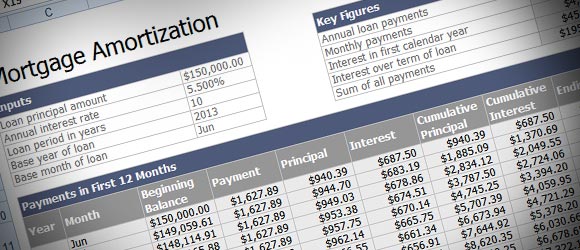
A mortgage amortization schedule shows each payment, the interest due for that period, the part that reduces principal, and the remaining balance after the payment. In plain English, it’s a row-by-row map of how your loan shrinks over time.
Principal is the amount you borrowed. Interest is the cost of using that money. In a standard fixed-rate mortgage, your monthly payment usually stays the same for the payment period, but the split between principal and interest changes every month. At the beginning, most of the payment goes to interest because the balance is largest. Near the end, much more goes to principal because the remaining balance is small.
That pattern is not a trick. It’s how amortization works. The lender calculates interest on the outstanding balance, usually on a monthly basis for monthly payments. If your annual interest rate is 6%, the monthly interest charge is based on the loan balance and the lender’s method for converting annual to periodic interest. In practice, lenders and countries may use different day-count or compounding conventions, so the loan disclosure and servicing statement are the right places to confirm the method.
A schedule can also show the total interest you will pay over the life of the loan if you follow the plan exactly. That number often surprises people because it is much larger than the total borrowed, especially on longer terms. The reason is simple: a 30-year term leaves the balance outstanding for a long time, and the lender keeps charging interest on that balance every month.
Side by side is where the schedule earns its keep. If the payment is $1,500 in a given month, the table may show one part as interest and the rest as principal. If you send an extra $200 and your lender applies it to principal, the next month’s interest charge is calculated on a smaller balance. That is the mechanism that can cut future interest costs, though the exact effect depends on your loan agreement and payment handling rules.
How principal and interest change over time
The principal share rises slowly at first, then faster, because the interest charge shrinks as the balance falls. On a fixed-rate mortgage with level payments, the math pushes the schedule in one direction only: interest down, principal up.
Picture the loan balance as a tank of water. Interest is charged on whatever is still inside. Early on, the tank is full, so the charge is high. After each payment, a little more leaves the tank, and the next interest charge is slightly lower. That frees a bit more of the fixed payment for principal reduction. Month after month, the shift compounds.
A generic explanation often skips one useful point: the payment amount itself is not “split” by choice. The formula sets the split. If your payment is fixed and the interest rate is fixed, the lender does not decide to “be nice” and send more toward principal early on. The math does that only after enough balance has been paid down. Cold, but true.
For that reason, the first few years of a long-term mortgage are the least dramatic time to stare at the balance and expect big movement. That does not mean the payments are wasted. It means most of the payment is doing the invisible job of paying the lender’s charge for letting you borrow a large sum. If you look only at the balance after 12 months, you may feel as if nothing happened. The schedule shows that a lot happened — just not mostly in principal.
One useful habit is to compare the cumulative totals, not just the monthly split. Over 12 months, you can see how much went to interest and how much reduced the balance. Over 60 months, the change becomes easier to feel. The schedule is a lens for time, not a verdict on any single payment.
How do I read the amortization table line by line?
Start with the opening balance, check the interest charge for that period, subtract principal, and confirm the remaining balance. That’s the whole logic of the table, and it repeats for every row.
- Find the opening balance for the period. This is the amount still owed before the payment is applied. Verify it matches the lender’s prior closing balance to the cent. If it does not, there may be a posting error, a late fee, or an unapplied payment.
- Identify the interest rate and payment frequency. A mortgage might be quoted annually but paid monthly, biweekly, or on another schedule. Verify whether the rate is fixed or variable and whether the lender uses monthly compounding. If the loan disclosure is unclear, the interest line in the schedule can look wrong even when it is not.
- Locate the scheduled payment amount. This is the fixed amount due for the period unless your loan has changed. Verify that the payment matches your note or statement. If the number differs, look for an escrow change, insurance change, or rate adjustment.
- Read the interest portion for that period. This is the cost of borrowing for the month, calculated on the remaining balance. Verify that it falls as the balance falls on a fixed-rate loan. If it rises unexpectedly on a fixed-rate loan, something else has changed.
- Read the principal portion. This is the payment amount left after interest is covered. Verify that principal equals payment minus interest, unless fees are included on the statement. If the numbers do not reconcile, separate the loan payment from escrow or servicing charges.
- Check the new remaining balance. Subtract principal from the opening balance to confirm the closing balance. Verify the balance declines every period on a fully amortizing loan. If it stays flat or rises, you may have an interest-only feature, a skipped-payment plan, or an error.
- Track any extra principal payment separately. If you paid more than the scheduled amount, confirm the extra went to principal and not to future interest or a suspense account. Verify how the lender applies overpayments. If you see no balance drop, the extra may have been held because the account was not coded properly.
- Review the cumulative totals after 12 months. Add the year’s interest and principal to see the real cost of carrying the loan for a year. Verify the totals against the annual statement or Form 1098 if you are in a system that issues one. If the totals do not align, ask for a transaction history.
The simplest check is that payment equals interest plus principal, and prior balance minus principal equals new balance. If your statement does not fit that pattern, stop and ask for a loan-level explanation before you assume the schedule is wrong.
Why does the first payment feel almost all interest?
Because interest is charged on the largest balance you will ever owe on the loan, the first payment feels that way. On a 30-year mortgage, the opening balance is still nearly untouched, so the interest charge takes a big bite out of the first payment.
That’s mathematically normal and psychologically annoying. If you borrow a large amount at a fixed rate, the lender computes the first month’s interest on that full amount. Only the leftover cash from your payment reduces principal. In the next month, because the balance is slightly lower, the interest charge is slightly lower too. Tiny at first. Then it becomes more visible.
A generic explanation often skips the emotional side of this. People look at the first statement and think their payment is barely reducing debt. That’s true in the narrow sense that principal reduction is small early on. But it misses the bigger truth: amortization front-loads interest, not because the lender is hiding principal, but because the balance is still high and interest is calculated on what remains owed.
This is also why extra principal payments matter more early in the loan than late in the loan. A $100 or $200 principal-only payment when the balance is still large can reduce the amount on which future interest is charged for the rest of the term. That can create interest savings, but the exact result depends on lender rules, timing, and whether the payment is actually applied to principal. Still, the mechanism is straightforward: less outstanding principal usually means less future interest on that loan.
I’d be cautious with any article that implies you should always accelerate a mortgage. That can be wrong for someone with high-interest debt, unstable income, expensive prepayment penalties, or a need for liquid savings. The amortization schedule explains the math. It does not decide your priorities.
When does the standard amortization rule not apply?
The standard rule does not apply when your loan is interest-only, adjustable, negatively amortizing, or built around irregular payment timing. Those cases change the schedule enough that the usual principal-versus-interest picture can mislead you.
Interest-only period: You pay only interest for a set time, often early in the loan — The balance does not fall during that period, so the schedule will show zero principal reduction until amortization begins. You need the loan’s specific terms, because the later payment jump can be large.
Adjustable-rate mortgage (ARM): The rate can reset on a stated schedule, such as every 6 or 12 months — Your future payment can change, which changes the interest/principal split. Read the adjustment caps, index, and margin; if those terms are unclear, the schedule is only provisional.
Biweekly or accelerated payment plan: Payments are made every 2 weeks instead of once a month — The timing changes how quickly principal falls. Some plans simply split the monthly payment; others effectively create one extra monthly payment per year. You need the lender’s exact processing rules, because not every plan works the same way.
Prepayment penalty or fee: The lender charges for paying down the loan early beyond a set limit — The schedule may show interest savings, but the penalty can offset them. Check the note and servicing rules before assuming extra payments are beneficial.
Escrow or taxes bundled into the payment: Property taxes and insurance are added to the monthly bill — The total payment is not the same as the loan payment. Separate the escrow portion from the principal-and-interest portion, or the schedule will look wrong even when it is correct.
In each of these cases, the table still helps, but only if you know which part of the payment is truly reducing the loan and which part is doing something else.
The mistakes people make with amortization schedules
The biggest mistake is reading the total payment as if it were all loan payoff. It is not. If your monthly bill includes escrow for taxes or insurance, only part of that bill reduces the mortgage balance. The result is confusion about why the balance fell less than expected. The correct alternative is to isolate the principal-and-interest line from the full housing payment.
Another mistake is assuming every extra payment goes to principal automatically. Some lenders require a principal-only designation or a specific online payment option. The result is that the money may sit in a suspense account or be applied to future installments. The right move is to read the payment instructions and confirm the allocation on your next statement.
A third mistake is ignoring fees and late charges when checking the schedule. Those items can make a payment look “off” even if the amortization formula is fine. The result is wasted time arguing with the wrong line item. The better approach is to separate loan interest, principal, escrow, and servicing fees into different buckets.
A fourth mistake is comparing mortgages only by the monthly payment size. A lower payment can mean a longer term and far more interest over time. The result is focusing on affordability alone while missing the cost of carrying the balance longer. The better choice is to compare both the payment and the schedule, including the term and rate.
A fifth mistake is treating the schedule as permanent. On variable-rate loans, refinance transactions, loan modifications, and recasts can all change the pattern. The result is relying on a table that no longer matches the loan. The better choice is to request an updated amortization schedule after any formal change.