Last updated: September 10, 2026
Key Takeaways
- That is the core pattern, whether the loan term is 15 years, 25 years, or 30 years.
- Lender says 12 monthly payments? Your draft says biweekly. Stop there and compare the papers.
- For an interest-only period of 3 to 10 years, the schedule tells you when the payment will jump.
- A schedule can list 360 monthly payments and still hide a final balloon if the loan is structured that way.
Amortization and a payment schedule are related, but they are not the same thing. A mortgage is where the difference gets real. Amortization vs payment schedule: what homebuyers need to know is that amortization shows how the debt shrinks over time, while the payment schedule shows when each payment is due and how much of that payment goes to principal and interest. This is information, not financial advice. And because mortgage rules, interest calculations, and disclosure standards vary by country and lender, you should check your own loan documents and a qualified adviser if your situation is unusual.
Who this is for — and who should read the loan documents first

This is for a homebuyer who already has a mortgage offer, a loan estimate, or a draft amortization table in hand and wants to know what the numbers mean before signing a 15-, 20-, or 30-year loan. It assumes you know the basic words “principal,” “interest,” and “monthly payment,” but not necessarily the difference between the schedule that sets your payments and the math that shows how the balance falls. If you are looking at an adjustable-rate mortgage, an interest-only period, a balloon payment, or a loan with extra fees folded in, the standard explanations still help, but the details in your note and disclosure forms matter more than any generic article.
The short answer: amortization is the process; payment schedule is the timetable. A fully amortizing loan is designed to reach a zero balance by the final payment if you make every payment on time and no terms change. The payment schedule is the list of due dates and payment amounts. On a plain fixed-rate mortgage, those two usually move together. On a loan with a teaser rate, a payment holiday, biweekly payments, or variable interest, they can diverge fast.
I would not treat this as a do-it-yourself decision if your mortgage has negative amortization, a balloon payment, or a prepayment penalty that changes the math. Those features can make a loan look manageable on paper while the balance grows or a large amount comes due at the end. Ugly surprise. In those cases, a mortgage adviser, housing counselor, or lawyer who works in your country’s rules can help you read the note correctly; for a U.S. overview of mortgage disclosures and terms, see the Consumer Financial Protection Bureau and your loan estimate or closing disclosure.
Amortization vs payment schedule: what each one actually shows
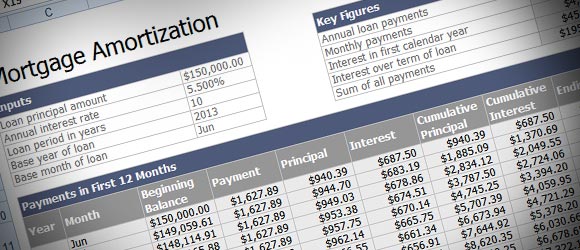
Amortization is the way a debt gets paid down over time through regular payments. A mortgage amortization schedule usually breaks each payment into two parts: interest, which is the cost of borrowing, and principal, which reduces the amount you owe. Early in the loan, a larger share of each payment goes to interest because the balance is still high. Later, more goes to principal because the balance is lower. That is the core pattern, whether the loan term is 15 years, 25 years, or 30 years.
A payment schedule, by contrast, is the calendar of what you owe and when. It tells you whether payments are monthly, biweekly, or weekly; when the first due date lands; and whether the payment amount stays level or changes over time. A payment schedule may include fixed installments, final balloon amounts, escrow for taxes and insurance, or an interest-only period. It can exist even when amortization is not straightforward.
The easiest way to tell them apart is to ask two different questions. “When do I pay?” is payment schedule. “How does my balance change after each payment?” is amortization. On a standard 30-year fixed-rate mortgage, your lender may give you both in one table. On the first line, you might see the payment date and total payment. In the columns, you might see interest, principal, and remaining balance. The dates are the schedule. The shrinking balance is amortization.
This distinction matters because borrowers often mistake a payment schedule for proof that a loan will be paid off on time. It may not. A schedule can list 360 monthly payments and still hide a final balloon if the loan is structured that way. It can also show a payment amount that does not cover the monthly interest charge, which means the balance can rise instead of fall. That is negative amortization, a term worth defining: it means the loan balance increases because the payment is too small to cover all the interest due.
How a mortgage amortization schedule is built
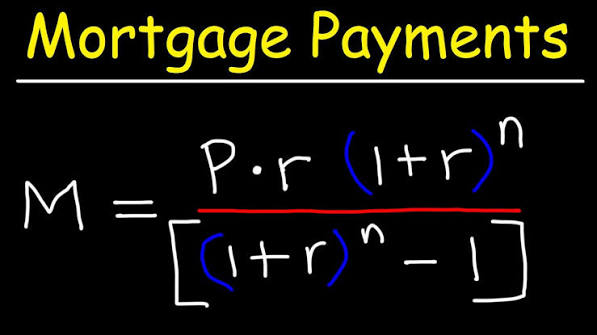
A mortgage amortization schedule is built by applying the interest rate to the current balance, then subtracting the principal portion of each payment. The standard formula depends on the loan amount, annual interest rate, compounding method, and payment frequency. Lenders may disclose the annual percentage rate, or APR, but the actual schedule usually follows the note’s rate and timing rules, not just the headline rate.
Here is the basic procedure I would use to read one:
- Identify the loan amount and starting balance. Use the principal advanced at closing, not the home price. Verify that lender fees are not being treated as borrowed principal unless the note says they are. A mismatch here means every later line will be off; if the closing disclosure is unclear, ask a mortgage professional or housing counselor to compare it with the note and settlement statement.
- Write down the interest rate and how often interest is calculated. Note whether the rate is fixed for the full term or can reset after 5, 7, or 10 years. Verify the compounding rule, because monthly compounding on a 6% note is not the same as simple annual math. If the disclosure is vague, the payment figures may not line up.
- Check the payment frequency. Monthly, biweekly, and weekly schedules produce different timing of principal reduction. Verify that the schedule you are reading matches the actual due dates in the note. Lender shows 12 monthly payments but your draft says biweekly? Stop and reconcile the documents.
- Find the first full payment date. Mortgage schedules often include a partial first month of interest. Verify whether the first payment is a full installment or a short one. A problem here can create confusion about the “missing” interest at closing.
- Read the split between interest and principal for the first 12 payments. Check how much of the payment goes to interest at the start and how quickly principal begins to rise. If the first several payments barely reduce balance, that is normal on long-term loans; if principal is negative, the loan is not standard amortization.
- Locate any escrow or insurance line items. Property tax and homeowners insurance can sit outside amortization but inside the payment you mail each month. Verify whether the schedule includes escrow, because escrow changes the total payment without changing the loan balance.
- Look for a final balance of zero. A true fully amortizing schedule ends at zero if all scheduled payments are made. Verify the last line shows no remaining principal. If there is a remainder, the loan is not fully amortized or the payment amount is too low.
- Test the effect of one extra principal payment. Add a small extra amount, such as one additional month’s principal-only payment or a one-time extra $100, and verify how the balance and payoff date change. If the schedule does not shorten when extra principal is applied, ask whether the loan has restrictions or whether the calculator is ignoring prepayment.
The key thing to verify is that your payment schedule and amortization math are using the same assumptions. If one line uses a 30-year term and another uses a 25-year amortization, the numbers will never reconcile cleanly. That is not a small formatting issue. It changes the size of the monthly payment and the total interest cost over the life of the loan.
What homebuyers usually miss in the first 5 pages of the disclosure
Homebuyers usually miss that the payment amount can be correct while the interpretation is wrong. A mortgage disclosure may list one monthly payment, but that figure can include principal, interest, taxes, insurance, mortgage insurance, or homeowners association charges. Only the principal-and-interest portion feeds the amortization of the loan balance. If you compare the full payment to an amortization table, you will think the numbers are off when they are not.
The second thing people miss is that the first year tells you very little about the whole loan if the term is long. On a 30-year mortgage, the early payments are front-loaded with interest. That means the balance falls slowly at first even when you are paying exactly what the schedule says. If you plan to sell in 3 or 4 years, the amortization pattern matters more than the total loan term because your equity build-up will be modest unless home value rises or you pay extra principal. Slow start, no drama.
The third miss is fee treatment. Closing costs, prepaid interest, discount points, and lender credits may appear in the closing package but do not all affect amortization the same way. Some costs increase the cash you need at closing without increasing the loan balance. Others may be financed into the principal. That difference matters because it changes the starting point of the schedule; if the treatment is unclear, ask a mortgage professional or housing counselor to confirm whether the fee is part of the principal.
The fourth miss is that a payment schedule can be legally binding even if the amortization table is only an illustration. Many lenders provide sample tables that assume on-time payments and no extra charges. That is helpful, but it is not a guarantee that your actual account will behave that way if insurance, taxes, servicing fees, or rate changes come into play.
If you want a clean read, focus on three lines in the disclosure: the note rate, the payment frequency, and the remaining balance after the first 12 payments. Those three figures usually tell you whether you are looking at a plain fixed amortization or a more complex structure.
When does the payment schedule matter more than amortization?
The payment schedule matters more than amortization when the timing of cash outflow is the real risk. If you are paid every 2 weeks, a biweekly schedule may fit your budget better than monthly payments even if the total annual amount is similar. If you have irregular income, the due dates can matter more than the theoretical speed of principal reduction. A borrower can understand amortization perfectly and still struggle if the payment dates do not match payday.
It also matters more when the loan has a nonstandard structure. For an interest-only period of 3 to 10 years, the schedule tells you when the payment will jump. For an adjustable-rate mortgage, it tells you when the first reset happens and what the payment might become under the loan’s caps and margins. For a balloon loan, it tells you the date a lump sum becomes due. In each case, the timetable is the danger point.
I would say the payment schedule is the right thing to focus on if you are budgeting month to month, comparing cash-flow strain, or checking whether a loan can fit a household that has uneven income. Amortization is still important, but it is not the first line of defense when the question is “Can I make this payment on this date for the next 12 months?”
The limitation here is plain: if you only look at payment timing, you may miss the long-term cost. A lower monthly payment can hide a slower path to equity or a larger final balance. That math stops working fast. That is why the schedule and amortization need to be read together, not separately.
When should a homebuyer stop and get qualified help?
A homebuyer should stop and get qualified help whenever the loan terms stop being a standard fully amortizing fixed-rate mortgage. That is the line where simple tables become dangerous.
Negative amortization appears: the balance goes up even when you pay on time — get a mortgage professional or housing counselor to explain whether the payment is below accrued interest and what the recast rules are.
There is a balloon payment in 1 to 10 years: a large lump sum may come due before the balance is fully paid — get the note reviewed so you know the exact payoff amount and whether refinancing is the only exit.
The rate can reset after a fixed period: the payment may change substantially after 3, 5, 7, or 10 years — ask for the lender’s adjustment formula and cap structure before relying on the current payment.
The schedule includes escrow that changes annually: taxes or insurance can raise the total payment without changing the loan balance — verify which part is amortized debt and which part is pass-through expense.
You plan to make extra principal payments but the servicer has rules: some loans apply extra money to future payments unless you instruct otherwise — ask for the prepayment instruction process so the extra amount actually reduces principal; the Consumer Financial Protection Bureau’s mortgage guidance can help you check the servicing language.
Your loan is in a different currency or has an unusual day-count convention: payment calculations may follow local standards rather than a generic U.S.-style monthly model — get local guidance so you do not assume the wrong formula.
These are not edge details. They are the points where a borrower can think a loan is affordable because the current payment fits, then discover the balance, due date, or reset terms do something very different later. If the document stack itself is confusing, a qualified adviser can help you compare the note, estimate, and closing disclosure line by line.
Common mistakes that make the numbers look wrong
The most common mistake is comparing the full monthly mortgage payment to the amortization table. That makes the numbers seem inconsistent because taxes and insurance are often included in the cash payment but not in loan amortization. The fix is to compare principal and interest only when checking balance reduction.
Another mistake is assuming every extra payment is automatically applied to principal. On some servicing systems, an overpayment can be held for the next month unless you direct it to principal. The consequence is slower balance reduction than expected. The correct move is to follow the servicer’s principal-payment instructions in writing.
A third mistake is ignoring the first partial month of interest. Many closings create a short first payment period. If you do not account for it, the first full payment can look too high or too low, even though the math is fine. The better alternative is to match the payment dates to the closing date and count the number of days in the initial period.
A fourth mistake is using a generic online calculator that assumes a fixed rate and no fees when the real loan has an interest-only period, mortgage insurance, or changing escrow. The consequence is a false sense of certainty. The correct alternative is to use the lender’s disclosure or a calculator that matches the loan type exactly.
A fifth mistake is treating a lower monthly payment as proof of a better loan. Lower payment can mean longer term, slower amortization, or a balloon at the end. The right comparison is total structure, not just the monthly figure.
What does a good amortization schedule look like?
A good amortization schedule looks boring in the best way: the payment dates are clear, the principal and interest split is consistent with the note, and the remaining balance falls predictably toward zero. On a fixed-rate loan, the interest portion should gradually shrink while the principal portion grows. The schedule should also show whether escrow is included and should not hide fees in a way that changes the debt math without explanation.
For example, if you borrow $300,000 at a fixed 6% rate for 30 years, the monthly principal-and-interest payment is about $1,799. Your first payment will be mostly interest, and the last payment will be mostly principal. A 25-year amortization at the same rate would require a higher payment and less total interest over time. Those simple numbers make the difference between schedule and amortization easy to see.
However, a good schedule is not just about the table itself. It should match the note, the closing disclosure, and any escrow statement you receive after closing. If the balance does not decline the way the schedule says it should, the problem is usually either a misunderstanding of the payment structure or a servicing error.
So, if you are comparing two loan offers, check the amortization period, the payment frequency, the rate reset rules, and the total interest cost over the life of the loan rather than looking only at the monthly payment. That comparison gives you a cleaner view of the real cost and the real cash-flow risk.
Amortization vs payment schedule: how to compare two mortgage offers
When you compare two mortgage offers, start with the same loan amount and the same repayment horizon. One offer may look cheaper because the monthly payment is lower, but the amortization vs payment schedule difference can hide higher total interest, a longer term, or a balloon. If the schedules are not the same, the comparison is not apples to apples.
Then check whether the payment frequency matches your cash flow. Monthly, biweekly, and weekly structures can produce different total interest and different convenience levels. If one offer uses biweekly payments and the other uses monthly payments, you should confirm whether either lender is simply dividing the annual amount differently or actually accelerating principal repayment.
After that, compare the first 12 months of the amortization schedule. Look at how much principal is reduced in year one, whether escrow is included, and whether any upfront fees are being financed. That is often where the true difference in loan structure shows up.
Finally, read the fine print on resets, prepayment, and balloon risk. A lower payment today is not necessarily a better loan if the payment schedule leaves you exposed later. Overall, the amortization vs payment schedule question is really a question about both affordability and future risk, and the only reliable answer is to read the note, the estimate, and the closing disclosure together.
For more on mortgage forms and repayment terms, the Consumer Financial Protection Bureau and the Federal Trade Commission both have plain-language guides, and the CFPB’s mortgage pages are a good starting point for U.S. borrowers.
Quick glossary
Amortization: the process of paying down a loan over time through regular payments.
Payment schedule: the timetable showing when payments are due and how much is due on each date.
Principal: the amount borrowed, not including interest.
Interest: the cost of borrowing the principal.
Negative amortization: when the loan balance increases because the payment does not cover all accrued interest.
Balloon payment: a large lump sum due at a specified point before the loan is fully paid.
Escrow: money collected with the payment for taxes, insurance, or related charges.
APR: annual percentage rate, a broad cost measure that can include some fees as required by local disclosure rules.
If you want the cleanest possible read on a mortgage, keep the schedule